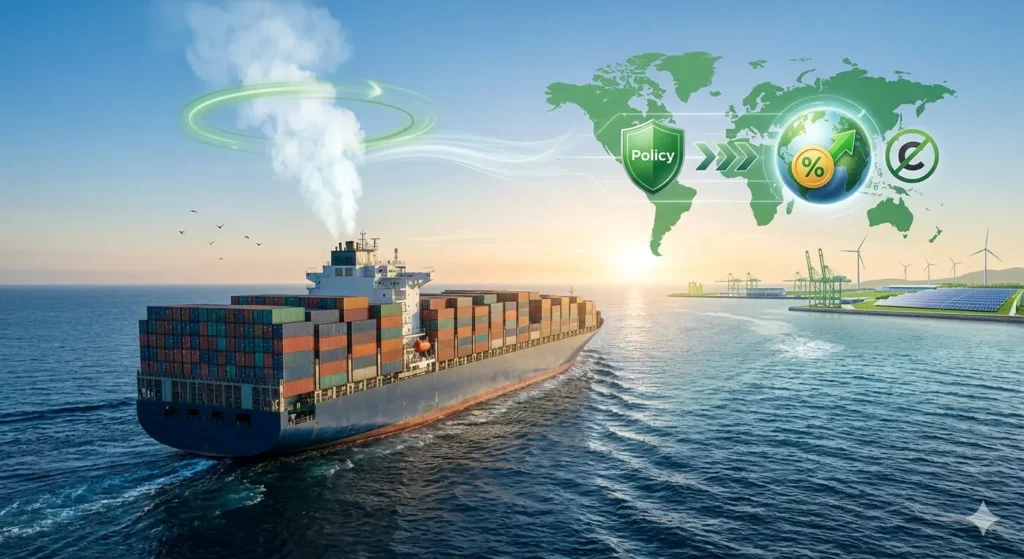
In a historic development, cargo vessels engaged in the global transportation of goods will be mandated to compensate for their carbon emissions. This decision comes in the wake of a consensus reached among 63 member states of the International Maritime Organization (IMO), the United Nations body charged with overseeing global shipping regulations.
With 80% of traded goods transported across the ocean, the shipping industry is at the heart of the global economy. The industry as a whole is a major contributor to the world’s carbon footprint, accounting for 3% of global greenhouse gas (GHG) emissions. This is due to the sheer volume of movement and the industry’s heavy dependence on fossil fuels.
The IMO Net-Zero Framework is the first of its kind in the global arena, combining mandatory emission limits and greenhouse gas pricing governing the shipping industry worldwide. The framework was adopted in the 83rd session of the Marine Environment Protection Committee to achieve the target set out in the 2023 IMO GHG strategy and is set to be formally adopted in October 2025.
India has emerged as a key supporter of this framework despite accounting for less than 1% of global fleet, aligning with its broader global climate commitments and strategic vision to lead in renewable energy and sustainable maritime practices.
This article examines the multi-layered implications of the IMO’s carbon tax levy while specifically analysing India’s implementation of such a carbon tax. This analysis aims to determine India’s unique position as both a climate-conscious developing economy and an aspiring green hydrogen hub, its proactive stance, and the potential economic and environmental impact of this historic step toward a greener shipping industry.
Background
In the backdrop of the IMO framework, it is important to understand the various initiatives undertaken in the past to mitigate the environmental impact of the shipping sector. The IMO introduced the Energy Efficiency Design Index (EEDI) in 2013 to reduce emissions from new cargo ships through implementing performance-based mechanisms and non-prescriptive measures, later expanded it in 2014 to include other ship types. In 2023, the IMO also enforced the Energy Efficiency Existing Ship Index (EEXI) for all existing ships of and above 400 GT and the Carbon Intensity Indicator (CII) for ships above 5,000 GT, requiring annual efficiency ratings and corrective plans for low performers. The EU’s “Fit for 55” initiative will include shipping in its Emissions Trading System by 2026. China’s Shipbuilding Industry Green Development Action Outline, 2023, promotes green fuels and shipbuilding leadership through policy and financial support. Developing countries like India, Brazil, and South Africa are also adopting measures to boost fuel alternatives, vessel efficiency, and green port infrastructure.