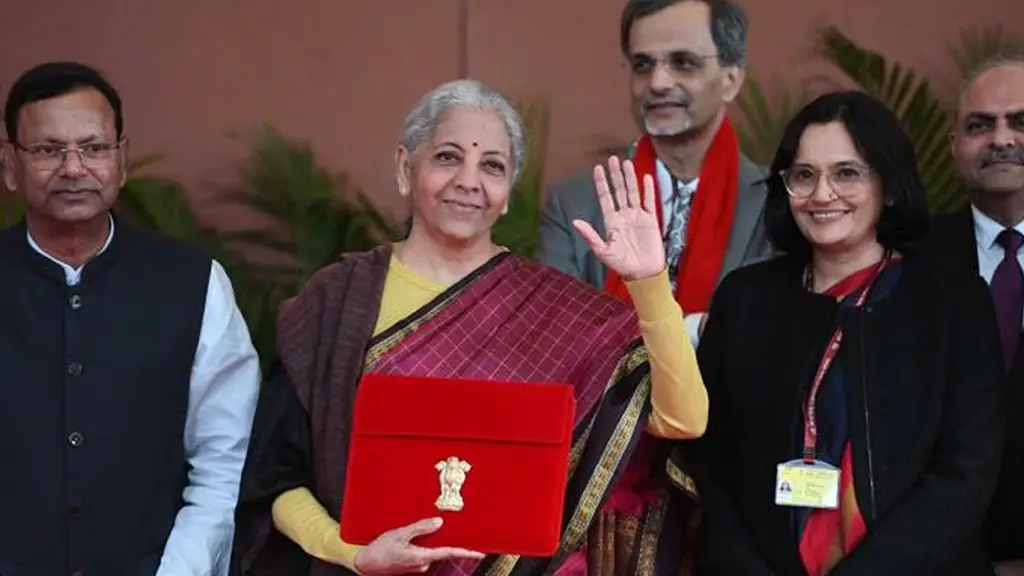
In the last Budget, Union Finance Minister Nirmala Sitaraman made a clarion call, “Trust first, scrutinise later”. The Budget proposals have not just kept her word but made a decisive shift in India’s fiscal and developmental strategy, guided by the philosophy of “action over ambivalence, reform over rhetoric and people over populism.”
The Budget proposals seek to balance sustained high economic growth with fiscal discipline and structural transformation. With India maintaining a robust growth trajectory of around 7 per cent in the present geopolitical shifts and buoyant tax collection, there is fiscal headroom to undertake structural reforms, including maintaining momentum to allocate for capex. The budget’s overarching priorities are to enhance productivity and competitiveness, and at the same time to build resilience against global volatility without losing eyes on fiscal discipline.
Despite robust growth, structural challenges continued to constrain India’s development trajectory. The manufacturing sector faces persistent bottlenecks, including dependence on high-tariff critical imports, fragmented industrial clusters, and high logistics and compliance costs. At the same time, MSMEs in India, a primary source of employment, faced chronic liquidity constraints, limited access to formal credit, and weak integration with digital financial systems.
Equally, the labour market exhibits a growing skills mismatch, particularly in services such as healthcare, tourism and emerging digital sectors. Rapid urbanisation further intensified pressure on transport, housing, logistics and energy infrastructure, especially in Tier 2 and Tier 3 cities. The challenges were not new, but in a world of reconfigured supply chains with selective global capital, addressing them has become increasingly urgent.
Initiatives in the Union Budget 2026
The Budget places strong emphasis on strengthening domestic manufacturing in strategic and frontier sectors vital for economic sovereignty. Key initiatives include the India Semiconductor Mission (ISM) 2.0, electronics component manufacturing schemes, Biopharma SHAKTI, and a dedicated programme for rare-earth permanent magnets. The revival of 200 legacy industrial clusters, the establishment of chemical parks and a container manufacturing scheme aim to build geographically diversified industrial ecosystems.