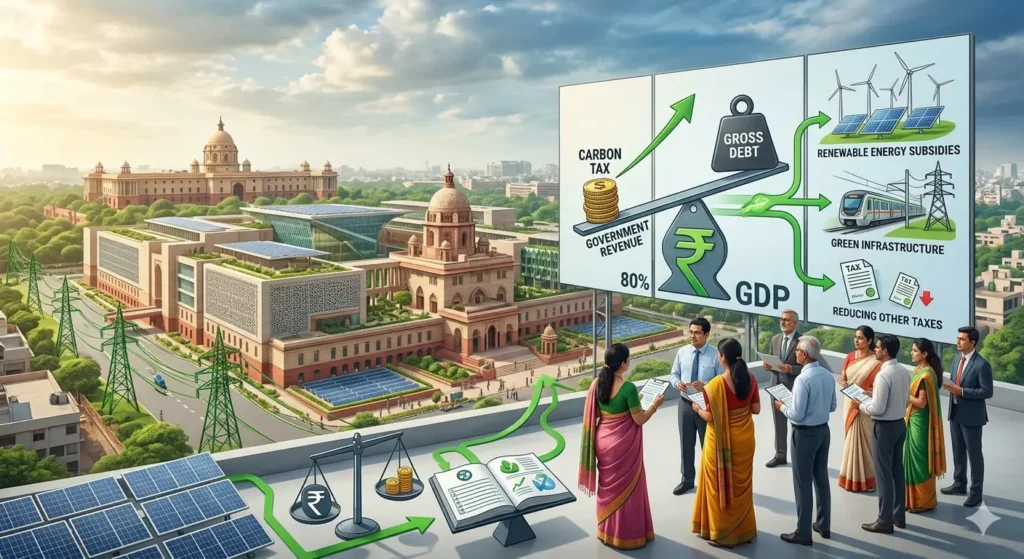
With emerging economies producing more CO2 emissions than their developed counterparts, there is a push for equal progress by nations to align environmental considerations with their economic development.
For a developing nation such as India, driven by increasing international trade, the use of carbon taxation to address both concerns is a viable option. India’s international debt stands at USD717.9 billion, a 10% increase from 2023 and a fifth of GDP. Although necessary to drive economic growth, it has put great pressure on the nation’s financial resources.
Global best practice may guide future fiscal policy. Sweden introduced its carbon tax in 1991, initially at the rate of SEK250 (USD22) per tonne of CO₂ but rising to SEK1,510 per tonne by 2025. However, when Sweden joined the EU, the bloc’s Emissions Trading System (ETS) exempted industrial electricity, used in such sectors as steelmaking. In 2020, the tax became one of the world’s highest, up to USD126 per tonne of CO₂. Between 1990 and 2018, Sweden reduced greenhouse gas emissions (GGE) by some 26%, with transport pollution down 11% and heating-related CO₂ falling by 87%. During the same period, per capita GDP grew by 50%, refuting claims that economic growth would suffer.